
How far can a vintage tee texture survive on black POD?
Even strong artwork can lose its planes, light, gradation, and openness when brought directly to black DTG/DTF/POD. The issue is not “bad art.” It is what survives and what tends to collapse on black fabric.
HALFTONE is a conversion to reduce that loss. Not a filter that simply changes the mood — its purpose is to translate the image into a rendition that is more likely to read as a product on black.
This article uses real 3D EMBLEM vintage tee prints from the 1980s as a reference point, and compares what HALFTONE is trying to protect on black POD.
Start with the side-by-side
The reference here is real surviving examples — including 3D EMBLEM — where planes hold on black, light stands as volume, and the print still feels right up close. What HALFTONE is aiming for is to preserve that established look in modern black POD as well.
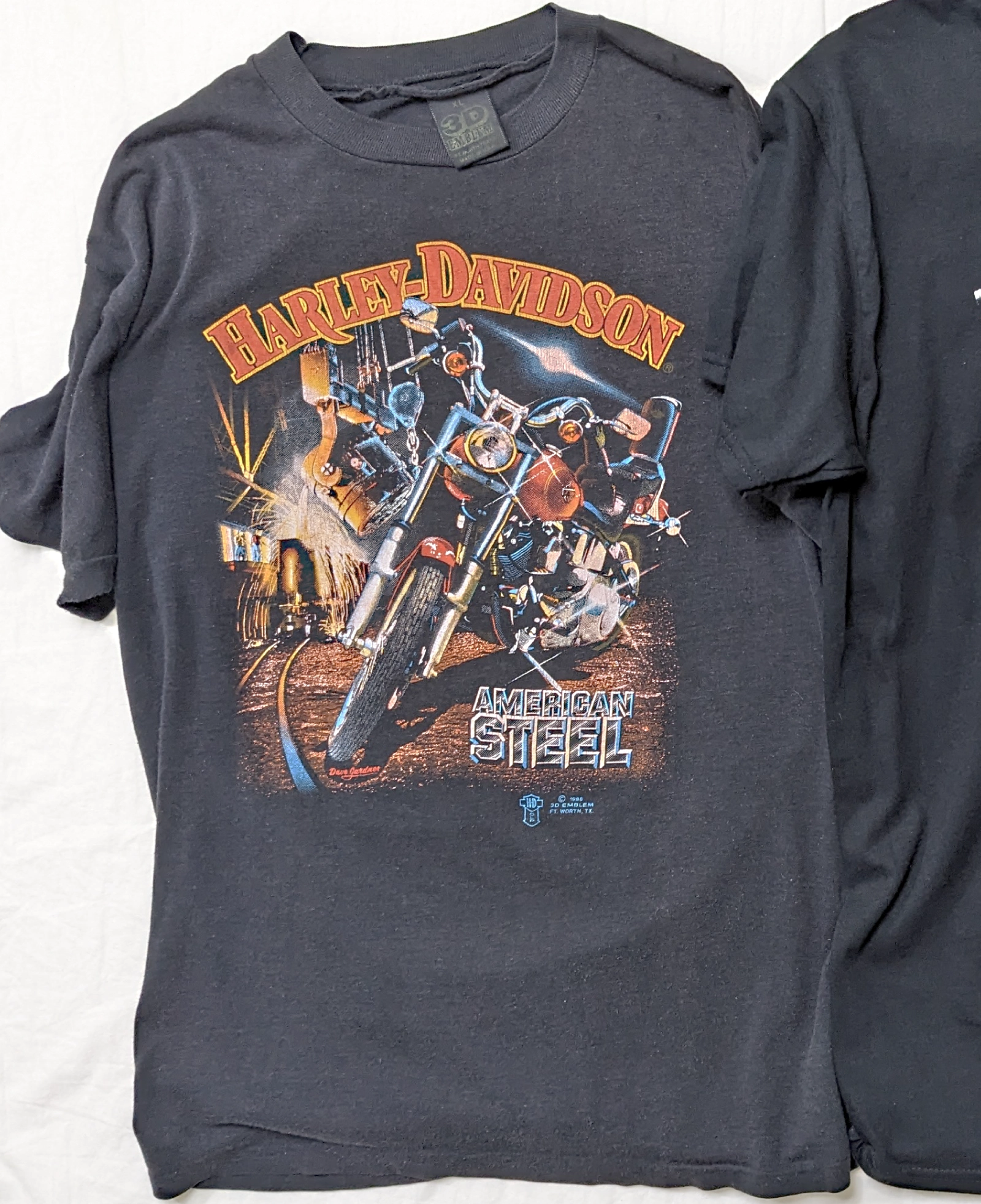
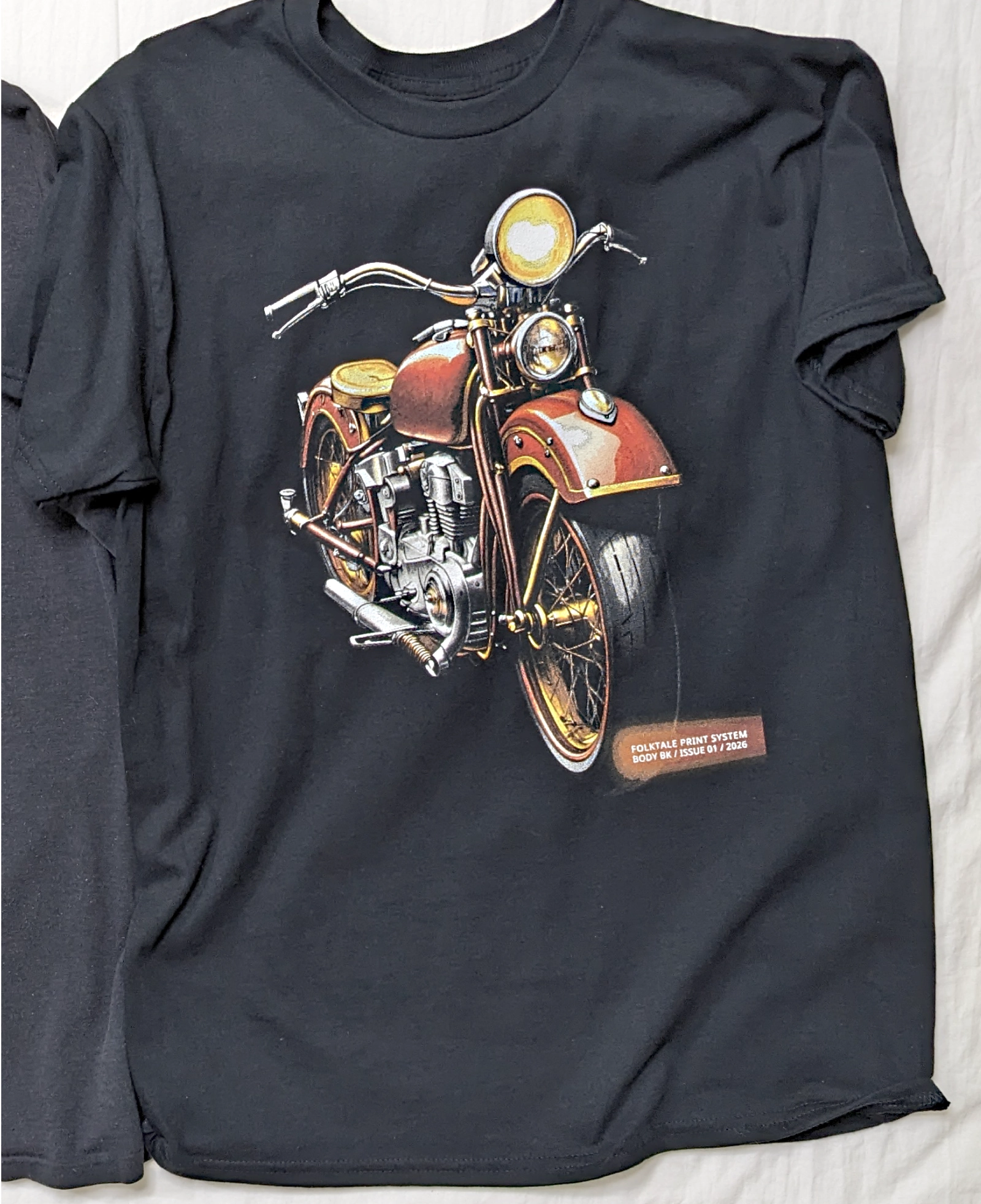
What to inspect in this comparison
- Whether planes hold on black
- Whether light reads as volume
- Whether midtones hold without collapsing
- Whether the print texture still feels right up close
The conclusion of this article
- HALFTONE's value is in the difference of what remains, not in feature names
- Real 3D EMBLEM prints are a reference standard, not nostalgia
- What should be protected on black can be carried through conversion
Why use real 3D EMBLEM prints as the reference point
What we are looking at here is not simply a vintage aesthetic. It is the judgment of the people who made 3D EMBLEM in the 1980s — who put their skill into making black-ground printing actually work as a physical object.
Dark areas stay dark without collapsing entirely. Bright areas do not end as blown-out white alone. Planes stand. Seen up close, the grain works as texture, not noise.
That tells us those makers were deeply committed to the conditions that make black-ground printing hold up. HALFTONE does not copy their surface results — it uses their outcomes as a standard for reading what conditions must be protected on black.
That said, the specific technical process behind those prints is not well documented in public sources. So this article will not invent or assert their method. What we look at is the conditions that survive in the physical results.
- Shadows that do not collapse entirely into black
- Whites that stand as planes without breaking the surface
- Midtones that connect
- Grain that reads as print texture
- A subject that does not drown in black
How far can metal, curves, and density survive on black
Bikes are the subject where HALFTONE’s value comes through most clearly. Metal reflection, the curves of tanks and fenders, part density, shadow-to-background separation, the core of the highlight. These are the elements that look right on screen but tend to collapse when brought directly to black POD.
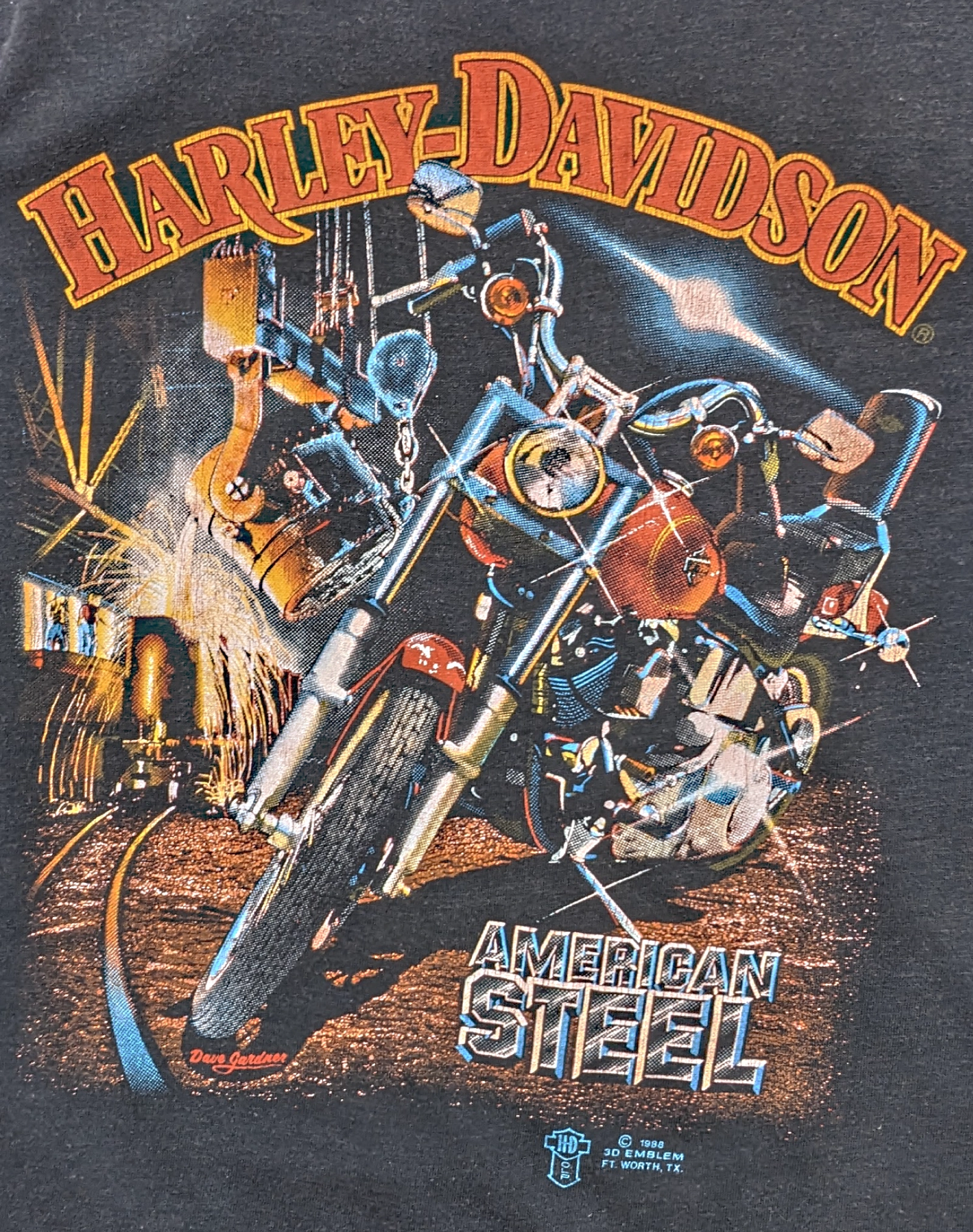
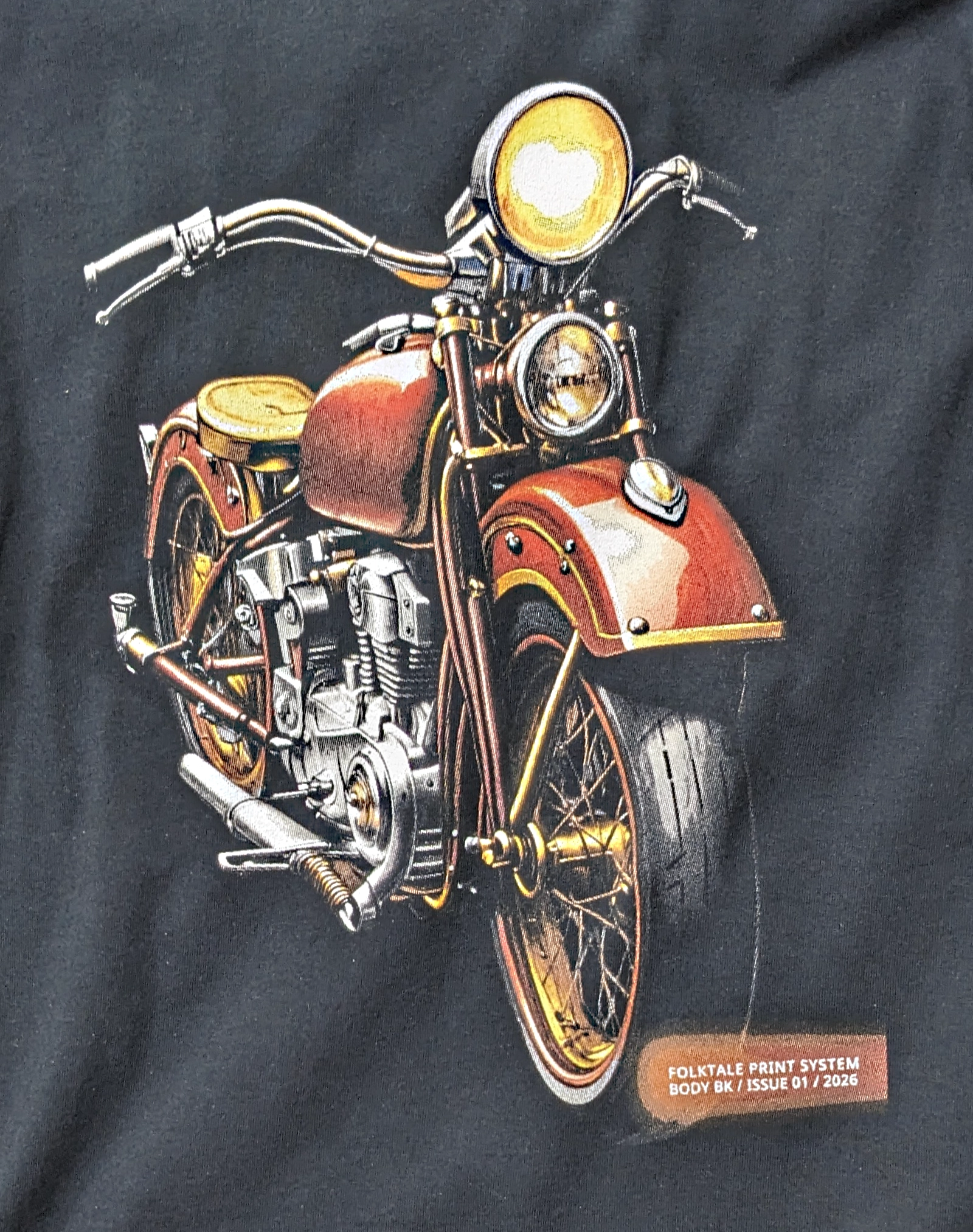
Looking at real 3D EMBLEM prints, the metal reads as metal. Dark areas are dark — but not everything has collapsed into the same black. Highlights are not just white lines added on top; they work as light that describes the direction of a curved surface and the difference in material.
That is also what HALFTONE is aiming for. Not to look like 3D EMBLEM, but to truly understand color halftone and carry the conditions that allow a result to hold on black.
Close-up comparison
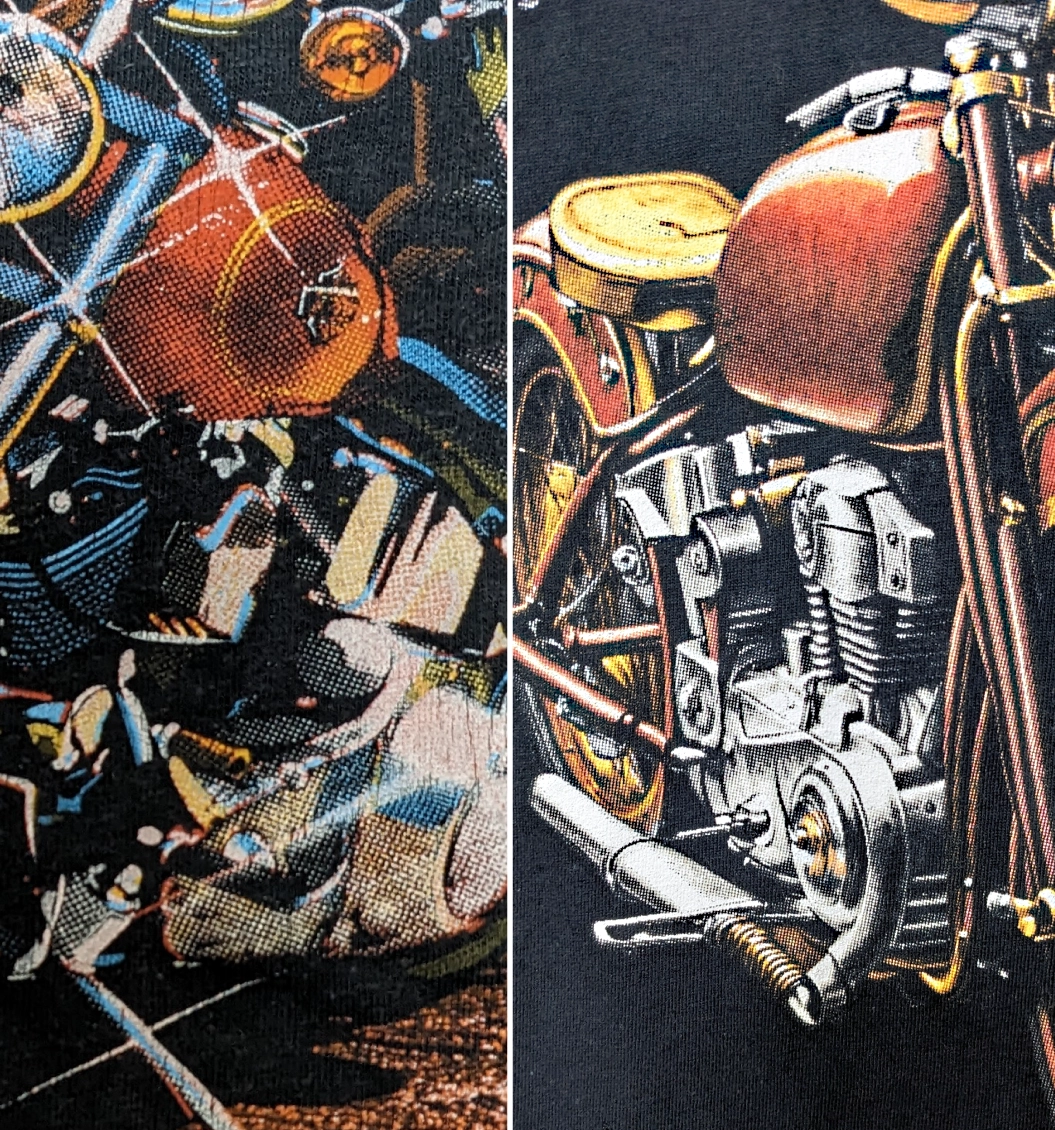
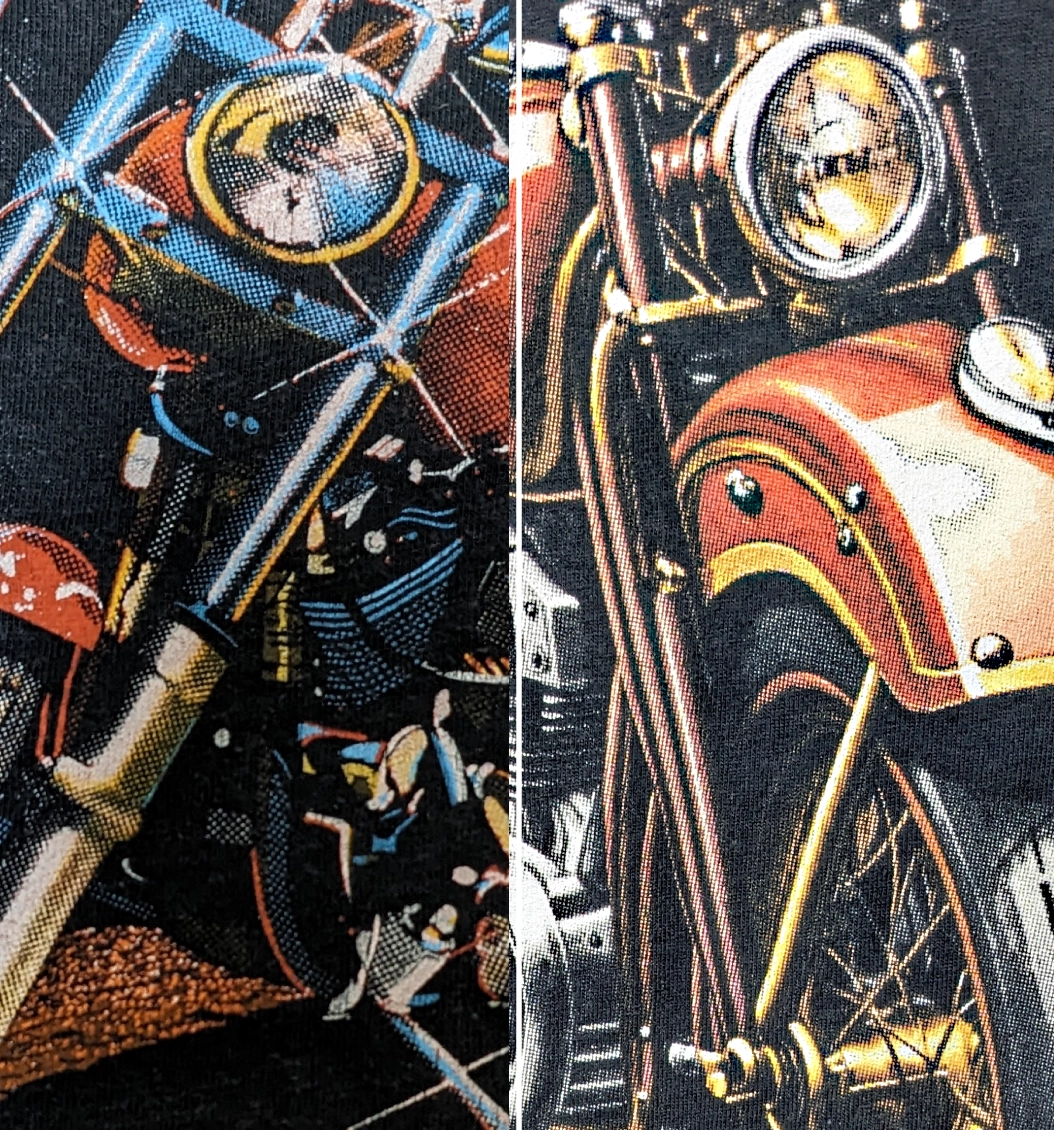
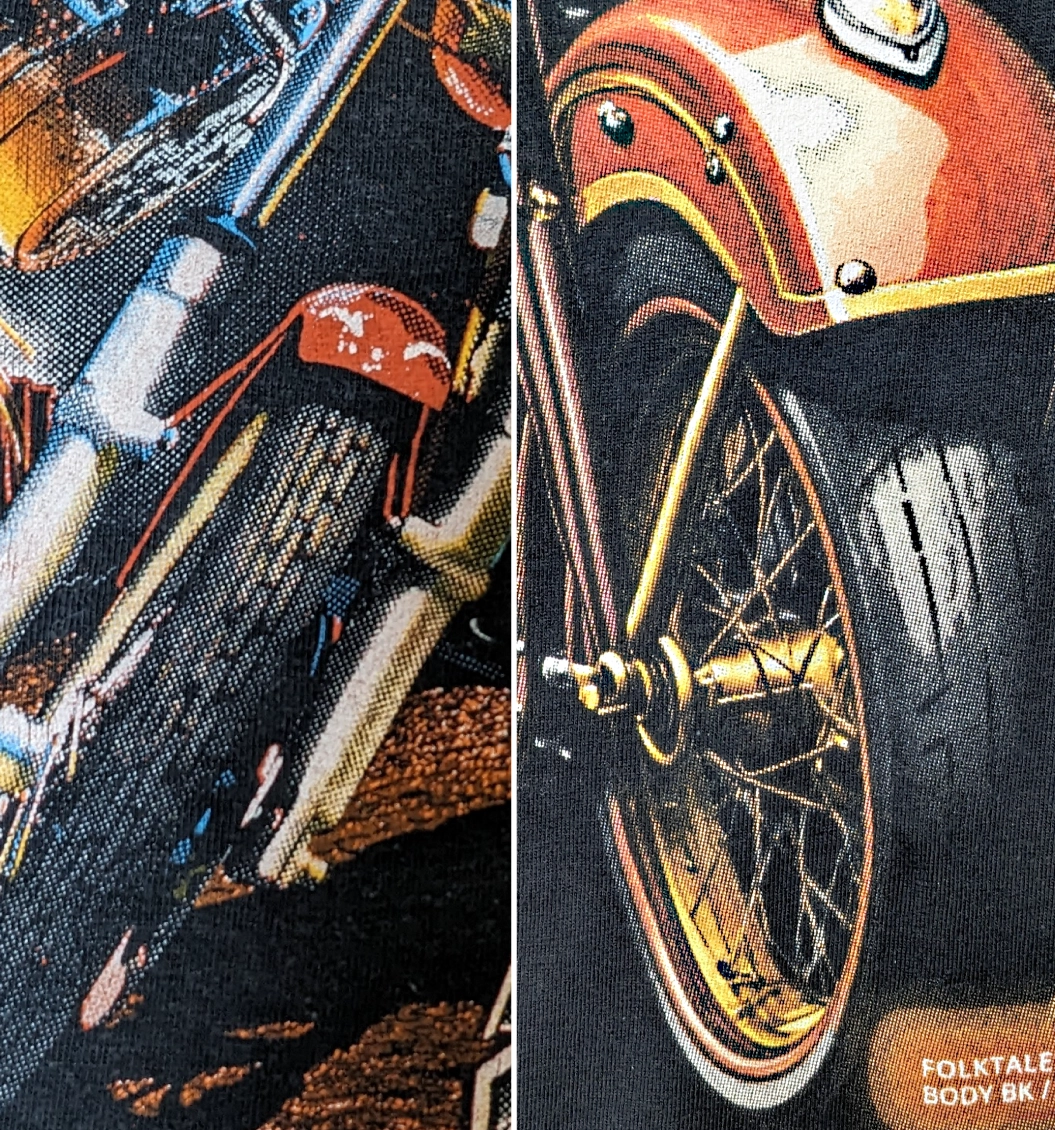
What to look for is not the amount of information. It is where light remains, where planes are still readable, where material differences are still alive.
The same concerns apply to other subjects
Beyond bikes, what tends to be lost on black POD does not change in its nature. With a flag, it is the play of planes and bands of light. With an animal, it is the coat and the way the eyes stand. The subject changes, but what needs protecting is the same: planes, light, midtones, and the subject’s presence.
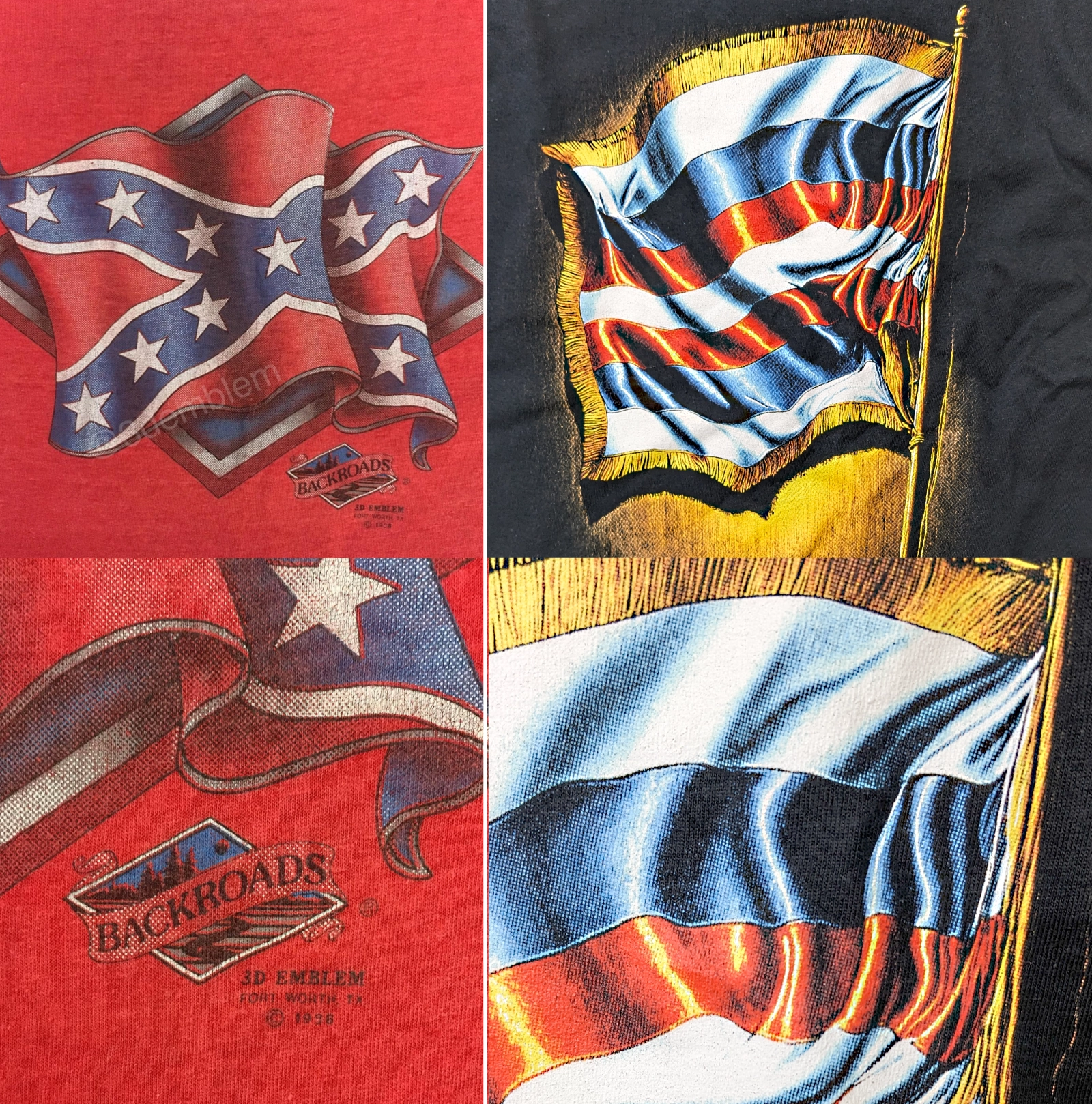
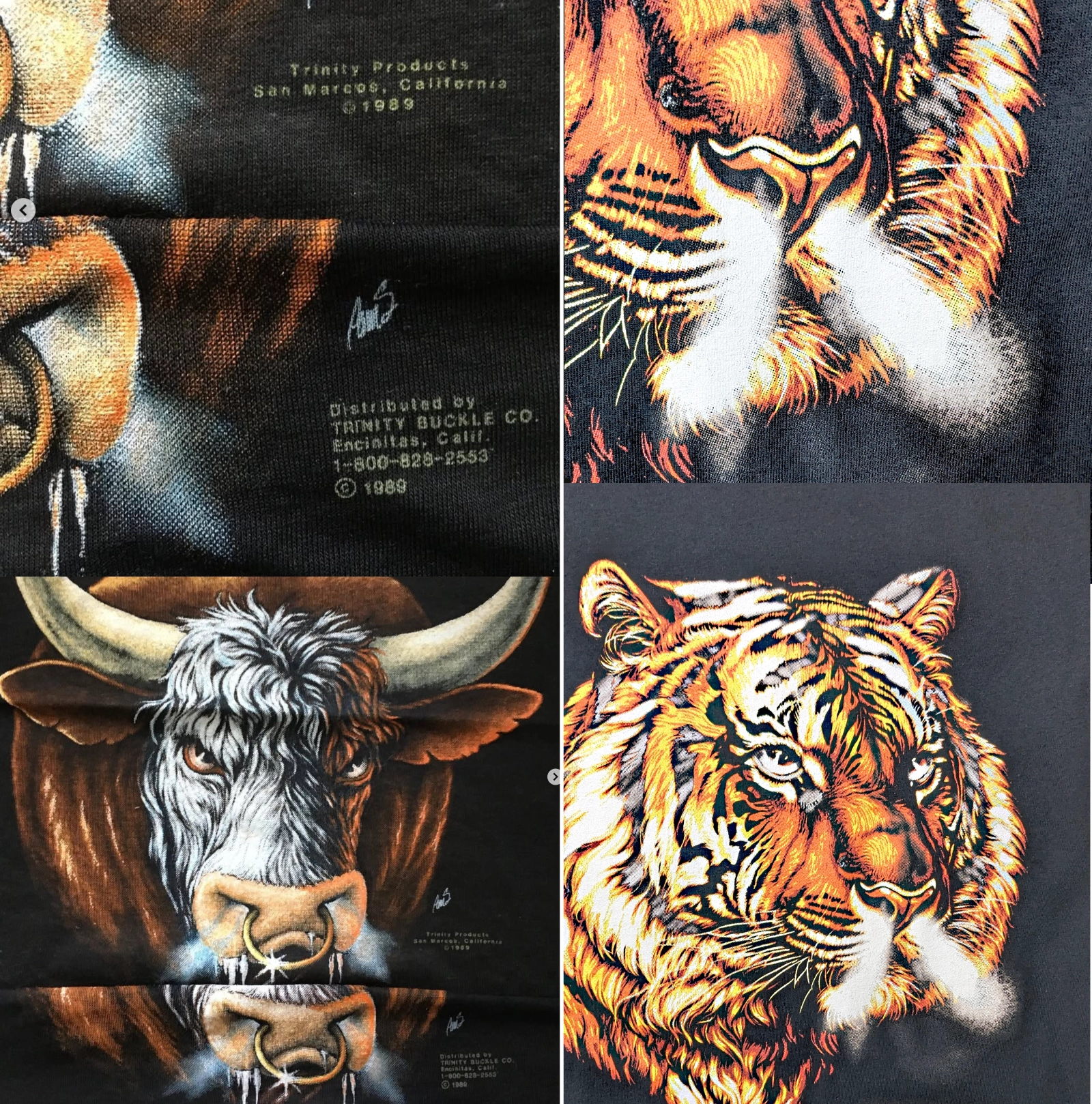
To be clear: HALFTONE is not meant to work only for bikes or to echo the 3D EMBLEM aesthetic. What tends to be lost when good artwork is brought to black-ground product work looks different motif to motif in appearance, but the underlying structure of what is lost is closely similar.
That is why HALFTONE exists not as motif-specific touch-up processing, but to rapidly deliver a conversion that avoids the elements black tends to destroy.
Original / direct / converted / printed
HALFTONE is not simply processing images to change their mood. It translates good original artwork into print-ready files that are more likely to hold as a product on black. Here is that difference shown across: original art, direct state, converted, and physical print.
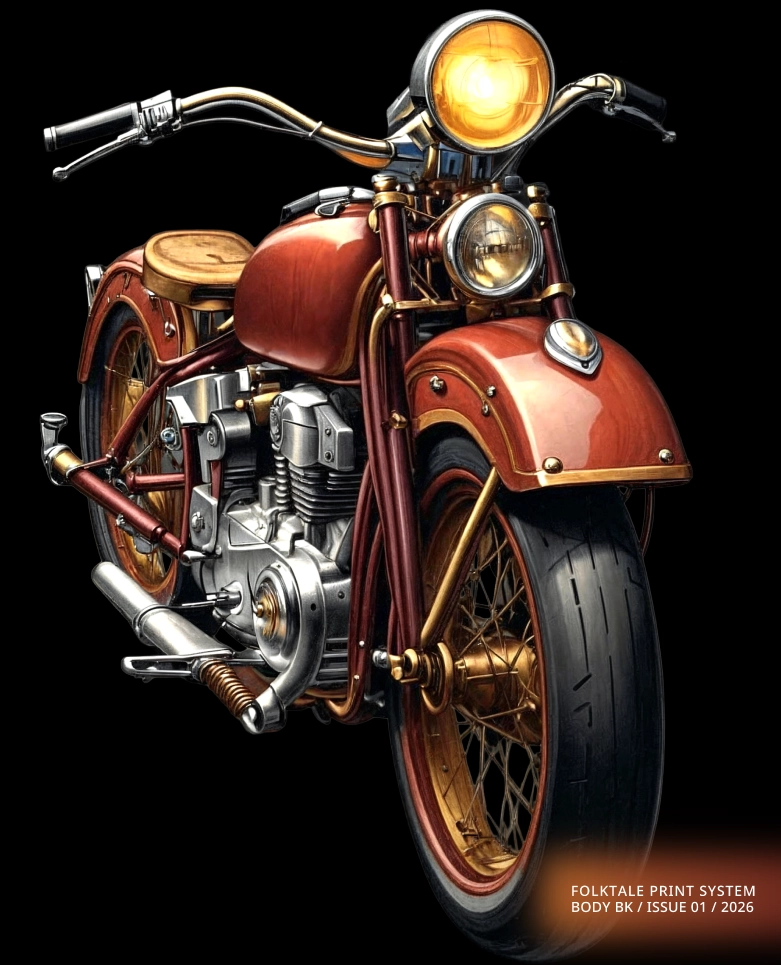
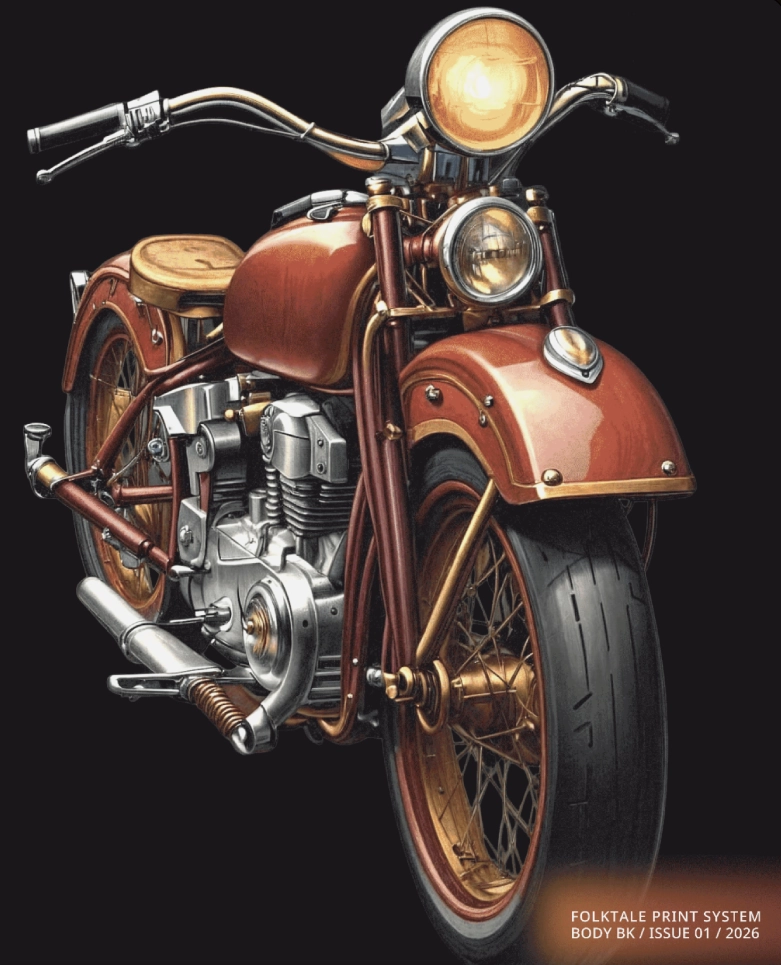
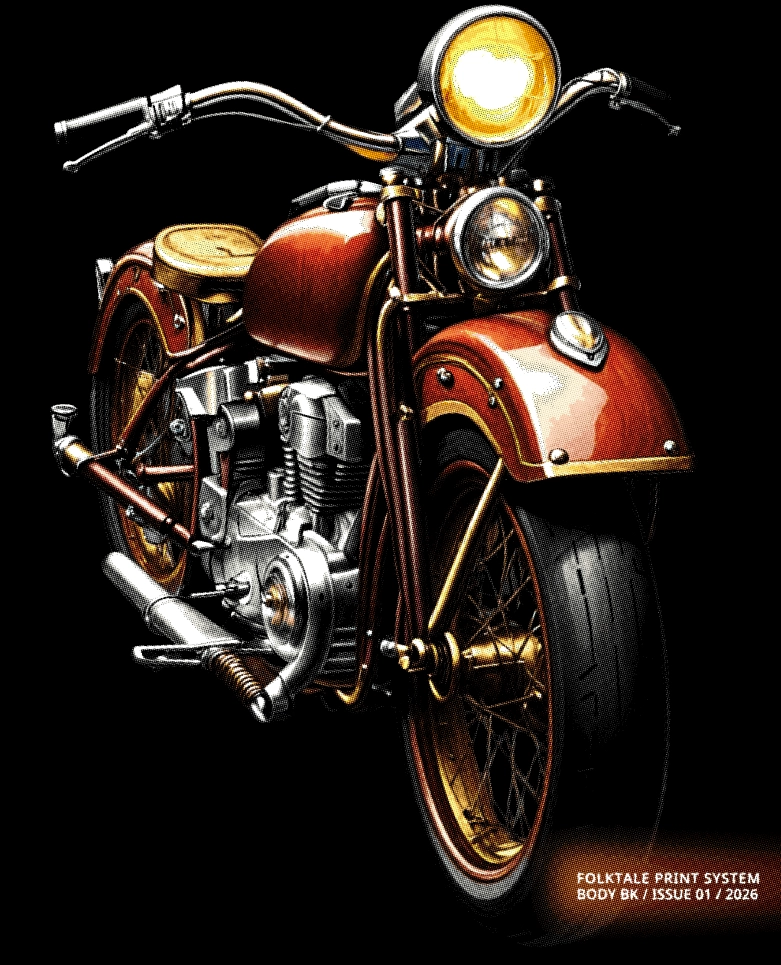
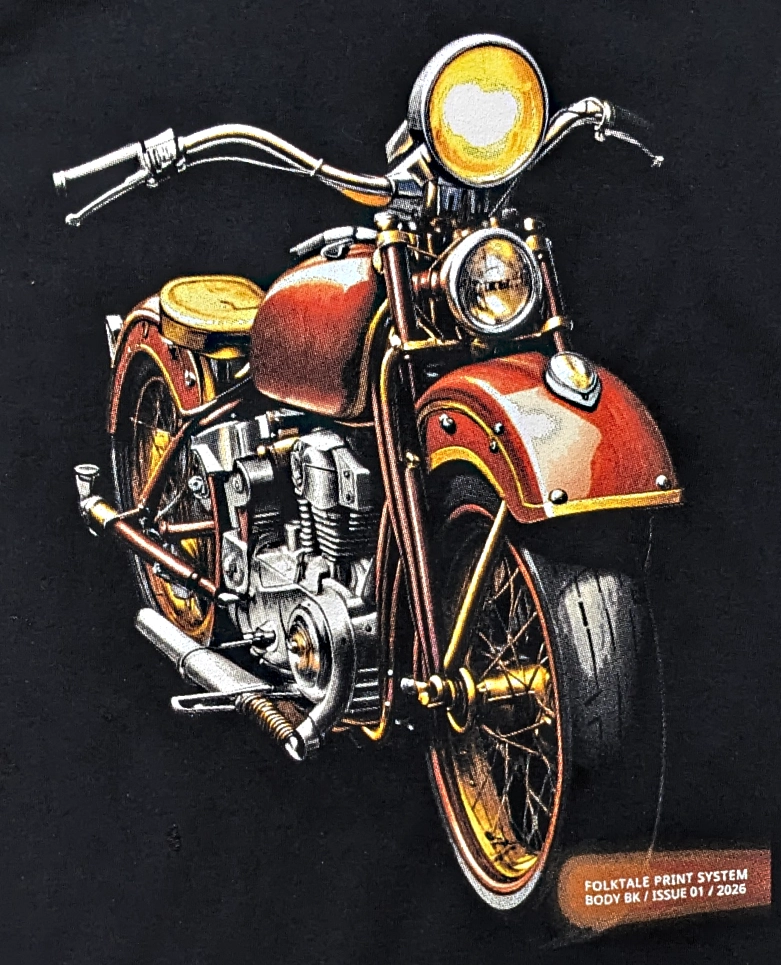
In the direct state, there are areas that tend to sink into black, get clogged, and lose volume. In the HALFTONE converted version, those areas are recovered for black-ground conditions, and the physical print is pushed closer to holding as a product.
What is being looked at here is not whether it became more striking. It is what remains and what falls away.
Summary
Looking at real 3D EMBLEM prints tells you what needs protecting on black. What needs protecting is not simply a quantity of detail.
- Planes remain
- Light stands
- Midtones connect
- The subject does not drown in black
- The print texture still feels right up close
HALFTONE is a conversion to keep that protected look from being lost in modern black POD. From good art on screen, to print-ready files that hold on black tees. So you can keep your focus on creating the art and building the world — not on managing what the fabric takes away.